In the current UK planning system, there are limited statutory requirements for community engagement, statutory planning application consultation applies to developments that exceed a certain size, let alone the quality of such or more radical forms of participatory planning or co-design. Pre-planning engagement methods and Statement of Community Involvement are locally managed. The National Planning Policy Framework (NPPF) encourages pre-app and early engagement; currently consultation undertaken by applicant is split between statutory consultees (neighbours, councilors, amenity groups, residents associations) and non-statutory consultees (residents, BIDs etc.).
The landscape of community engagement and co-design is changing. With Covid, we have seen the rise of digital engagement, such as those championed by local authorities for experimental traffic schemes and alfresco dining, and alternative forms of community-led governance, thinking about how to embed the community in early stages of strategic visioning, and post-construction stages of custodianship and maintenance.
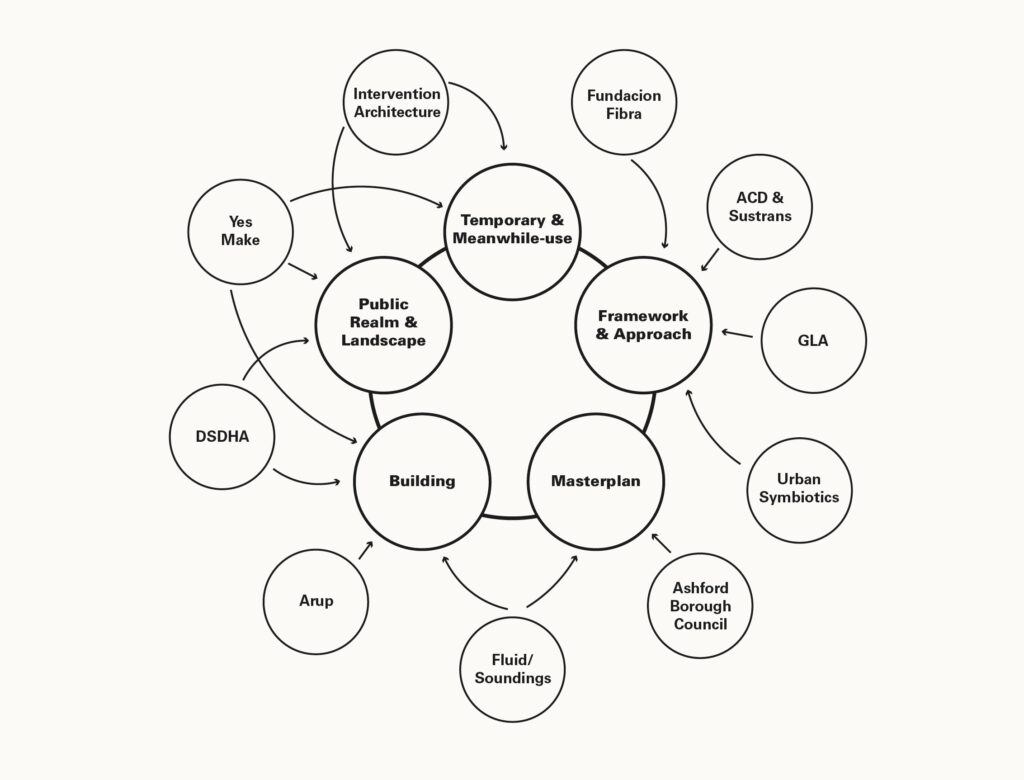
The following case studies are largely drawn from the UK context, with a few from abroad that covers the five main typologies for co-design:
- Temporary and meanwhile-use
- Public realm and landscape
- Building
- Masterplan
- Framework and approach